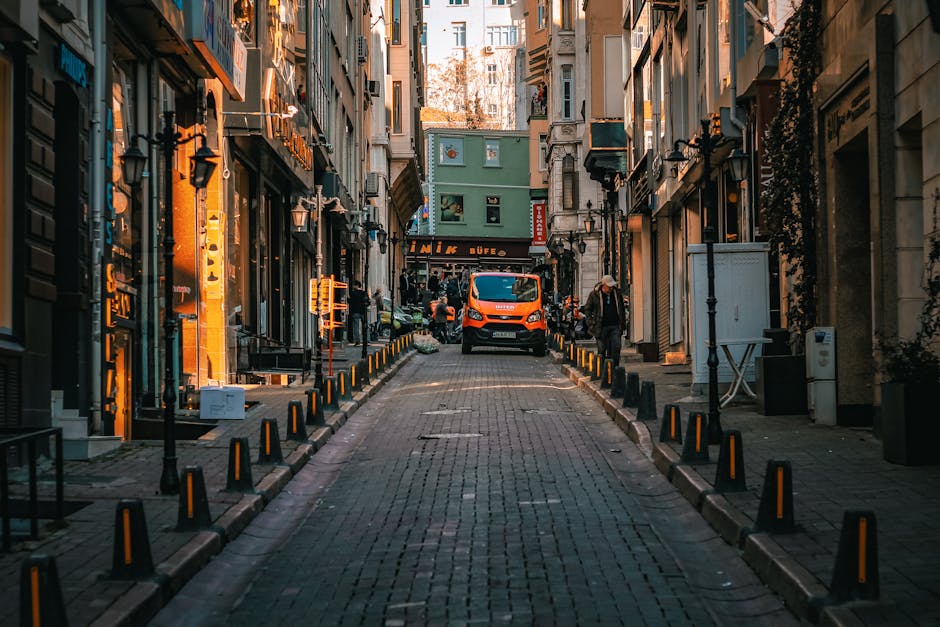
Bromley by Bow man and van tips for narrow terraces
If you are moving in Bromley by Bow and your street is one of those classic narrow terraces, you already know the awkward bit is not always the packing. It is the doorway that barely opens, the hallway that seems to get smaller once boxes arrive, and the van that has to be placed just so or the whole move starts to feel like a game of patience. These Bromley by Bow man and van tips for narrow terraces are written for exactly that kind of move: practical, local, and focused on making the day calmer rather than chaotic.
In our experience, the best terrace moves are the ones planned with the street, the stairs, and the timing in mind. That sounds obvious, but honestly, people often leave it too late. A bit of planning can save a lot of shuffling furniture back and forth, a lot of "sorry, can you just move that box?" moments, and a fair amount of stress. Below, you will find a clear walkthrough of how to handle tight access, how to load efficiently, what to prepare before the van arrives, and how to avoid the little mistakes that turn into big delays.
For readers who want a broader overview of moving support, it can also help to look at the company's man and van service alongside its wider removal services. If you are dealing with a full household move rather than a lighter load, the home moves and flat removals pages are useful starting points too.
Quick expert summary: Narrow terraces reward preparation. Measure the tight spots, book the right vehicle size, clear the route from front room to van, protect edges and floors, and keep heavy items grouped for faster loading. Small changes here make a surprisingly big difference.
Why Bromley by Bow man and van tips for narrow terraces Matters
Narrow terraces create a very specific moving problem. The property itself may not be huge, but the access can be tricky enough to slow everything down. A front room full of boxes is one thing. A front room full of boxes plus a slim hallway, a staircase with a turn, and a van that cannot sit directly outside the door is another matter entirely.
That matters for three reasons. First, time. If the van is parked a little way off, every extra trip takes longer. Second, safety. Tight corners, wet pavements, low ceilings, and heavy furniture do not make a great mix. Third, protection. In a terrace, the walls and banisters are often the first things to get knocked, and once a chip or scrape happens, it is impossible to pretend you did not notice it.
There is also the local reality of London streets. In places like Bromley by Bow, you may be dealing with shared parking, passing traffic, or limited loading space. None of that makes the move impossible. It simply means that the move needs to be organised with more care than a standard driveway job. Truth be told, the planning starts before the van even turns up.
How Bromley by Bow man and van tips for narrow terraces Works
A good man and van move in a narrow terrace is basically a sequence of small wins. You start by making access easier, then you reduce the number of items that need awkward handling, and finally you load in a way that matches the property layout. The whole point is to avoid unnecessary lifting, doubling back, and congestion around the front door.
Usually, the process looks like this:
- Assess the access. Check the street width, parking options, and whether the van can stop close enough for practical loading.
- Prepare the property. Clear the hallway, move loose items out of the way, and protect fragile edges before carrying anything heavy.
- Sort the load. Keep boxes grouped by room or priority so the team can load methodically.
- Use the right vehicle size. A smaller van can be more useful than a larger one if space is tight and access is awkward.
- Load in the right order. Heavy, stable items go in first; lighter and more delicate items are packed around them.
The best part? Once the loading system is clear, the move often feels much smoother than people expect. You are not fighting the house. You are working with it. That sounds simple, but it is a big shift.
If you are deciding between a lighter move and something more involved, the pages on man with a van and man with van can help you understand the service style. For larger or more complex loads, a removal van or even a broader moving truck may be more appropriate, depending on access and volume.
Key Benefits and Practical Advantages
Using a well-planned man and van setup for a narrow terrace has some clear advantages. The most obvious one is flexibility. You do not need to overbook a huge vehicle for a small property, which can be wasteful if the street is tight and the access is awkward.
Other benefits are less obvious but just as valuable:
- Faster handling in tight spaces. A smaller, agile vehicle can sometimes park closer to the door.
- Less disruption to neighbours. Efficient loading means less time blocking the street.
- Better control over fragile items. Fewer unnecessary handovers means fewer chances to bump furniture on a stair turn.
- Lower stress on moving day. You know where everything is going, and the path is clear.
- More practical cost control. Paying for the right setup is usually better than paying for unnecessary capacity.
There is a quiet advantage too: confidence. When you know the route from the front door to the van is manageable, you stop dreading the move and start treating it like a job you can actually finish. That matters. A lot.
Who This Is For and When It Makes Sense
This kind of moving advice is especially useful if you live in a Bromley by Bow terrace where the hallway is narrow, the stairs are compact, or parking is unpredictable. It suits renters, first-time buyers, students, small families, and anyone moving a modest load from a property that does not give you much elbow room. It is also relevant for people moving into or out of a flat over a terrace house layout, where access can be the real challenge rather than the volume of belongings.
It makes particular sense if you are moving:
- between nearby streets where short trips matter more than long-distance transport
- with bulky but not excessive items such as a sofa, mattress, desk, or fridge
- on a tight schedule, perhaps because the keys are coming late in the day
- without much help from friends or family
- from a home with stair turns, narrow thresholds, or limited front garden space
It may be less suitable if you have a very large household, multiple heavy appliances, or a move that needs specialist handling. In those situations, a fuller house removals or house removalists approach may be more sensible. For office or business moves, the needs change again, and commercial moves or office removals may be the better fit.
Step-by-Step Guidance
Here is the simplest way to handle a narrow terrace move without making it harder than it needs to be.
1. Measure the awkward bits first
Do not just measure the furniture. Measure the route. Check the width of the hallway, the tightest point on the stairs, the front door opening, and any corners where a mattress or wardrobe will need to turn. A tape measure is boring, yes, but it saves embarrassment later.
2. Decide what absolutely needs to go
Terrace moves are easiest when you reduce clutter before moving day. If something is broken, duplicate, or no longer worth the lift, consider whether it should be moved at all. For unwanted furniture, a furniture pick up or furniture removals service may be more practical than dragging it through a tight hallway.
3. Pack for the route, not just the room
Put the heaviest boxes in a manageable size. That is important. A small box full of books is much easier to carry down a narrow stairway than a giant box that looks sensible until you try to turn it on the landing. Keep each box clearly labelled, and group similar items together.
4. Clear the access path before the van arrives
Move coats, shoes, umbrella stands, mats, and anything else that narrows the corridor. Protect door frames and corners where possible. If the stair banister is vulnerable, wrap it. The idea is to create a clean line from room to van so nobody has to make awkward side steps while carrying weight.
5. Plan the parking point
Think in terms of distance as well as legality. The closest space is not always the best if it blocks traffic or makes loading unsafe. A slightly farther but easier position can often be quicker overall. It is one of those moving-day decisions that feels minor, then turns out to be crucial.
6. Load heavy items first
Large, solid items should go in first so they can anchor the load. Softer or lighter items can then fill gaps. This helps prevent movement during transit, and it reduces the need to constantly reshuffle the van.
7. Keep one person focused on the path
On small terrace jobs, a person watching corners, doors, and stair turns can prevent a lot of bumps. They do not need to do much grand and heroic. Just being the calm person who says "careful on the left" is enough. Honestly, that role matters.
Expert Tips for Better Results
Small details make the biggest difference in narrow terraces. In our experience, the moves that go best are not the ones with the flashiest equipment. They are the ones where the basics are done properly and in the right order.
- Use smaller boxes for dense items. Books, tools, and kitchenware become far easier to handle when the weight is spread out.
- Protect the stair edges. A bit of padding can save paintwork and reduce stress.
- Keep a "first in, last out" box. Toiletries, chargers, tea, snacks, and basic cleaning supplies should be easy to find.
- Do not block the whole hallway with sorted piles. It feels efficient until nobody can move.
- Leave a buffer for last-minute changes. There is nearly always one item that is bigger than you remembered.
- Take photos of furniture before dismantling. Very handy for reassembly, and less annoying than trying to remember where the brackets went.
A slightly silly but useful tip: keep a roll of tape and a marker in your pocket, not buried at the bottom of a box. Otherwise you will spend ten minutes looking for the thing you packed "somewhere safe."
If you need packing support, it may help to explore packing and boxes or packing and unpacking services. Those options can save a lot of time when the terrace layout already makes the move feel fiddly.
Common Mistakes to Avoid
Most terrace move problems are predictable. That is the good news. The bad news is that people still make them all the time.
- Booking the wrong size vehicle. Too big can be hard to park; too small can mean extra trips.
- Leaving packing until the final evening. You will always forget something, usually something important.
- Ignoring stair turns and ceiling height. This is how wardrobes become architectural obstacles.
- Forgetting parking reality. A map is not the street. The street is the street.
- Not protecting narrow contact points. Corners, skirting boards, and banisters take the hits first.
- Mixing heavy and fragile items carelessly. The box may survive. The glass inside may not.
- Trying to do too much with too few people. It is admirable in theory, tiring in practice.
One more thing: if you are moving a single bulky item, do not assume it will be easier just because the load is small. A piano, wardrobe, or large sofa can still be the hardest part of the day. Size is not always the issue; shape is often the real trouble.
Tools, Resources and Recommendations
You do not need a truckload of gadgets to move well in a narrow terrace, but a few sensible tools do help:
- Tape measure for doors, stair turns, and furniture dimensions
- Furniture blankets to protect surfaces and soften contact
- Stretch wrap for drawers, doors, and loose parts
- Labels or colour tags so room-based loading stays organised
- Basic trolley or sack barrow where steps and thresholds allow
- Work gloves for grip and hand protection
For more specialist jobs, extra planning is worth it. A piano, for example, deserves careful handling and should not be treated like a standard box move. If that is part of your situation, the piano removals page is the better place to start. For moves that need temporary holding space, storage can also be a useful buffer when access or timing is awkward.
And for anyone trying to keep the job budget under control, it is sensible to review pricing and quotes alongside your packing plan. That way you can see whether saving time by booking help now is cheaper than losing hours later.
Law, Compliance, Standards, or Best Practice
For most household moves, the practical focus is on safety, property protection, and sensible street use rather than complex legal detail. Still, there are some best-practice points worth keeping in mind.
First, parking and loading should be handled responsibly. Even if a van can technically stop somewhere, it should not create an unsafe situation for pedestrians, neighbours, or passing traffic. Narrow terraces can make this especially sensitive, so a cautious approach is always better than forcing a bad parking position.
Second, lifting and carrying should be done with care. Heavy items, awkward stair turns, and poor grip are where injuries happen. Good movers use teamwork, sensible weight distribution, and a calm pace. No heroics needed.
Third, the company handling your move should be clear about insurance and safety expectations. That does not mean every job is risk-free, because of course it is not. But it does mean the mover should work in a way that reflects standard moving industry practice, with proper handling and attention to damage prevention. If that is important to you, the insurance and safety and health and safety policy pages are useful trust signals to review.
Finally, if you want a clearer understanding of how the business handles service standards, payments, and customer expectations, it is sensible to look at terms and conditions and payment and security. Nothing dramatic, just good housekeeping before moving day.
Options, Methods, or Comparison Table
If you are deciding how to handle a Bromley by Bow terrace move, the main question is usually not "can it be moved?" but "what is the least painful way to move it?" Here is a simple comparison.
| Option | Best for | Strengths | Watch-outs |
|---|---|---|---|
| Man and van | Smaller household moves, single-room moves, light-to-moderate loads | Flexible, practical for tight streets, usually quicker to organise | May need extra trips if the load is larger than expected |
| Removal van | Standard home contents, bulkier items, more structured loading | More capacity, better for coordinated moves | Can be harder to place in very narrow streets |
| Moving truck | Larger moves with better road access | Handles more in one trip | May be overkill for tight terrace access |
| Storage plus staged move | Moves with timing gaps or access limitations | Reduces pressure on the day, helps split the job | Extra handling and planning needed |
For lighter terrace jobs, a man and van service is often the sweet spot. For something heavier, a removal services approach may be more efficient. If you are moving a whole house and want a more structured service, removals or house removals can make more sense.
Case Study or Real-World Example
Here is a typical example from a narrow terrace move. A couple in Bromley by Bow were leaving a two-bedroom terrace with a steep hallway turn and a front room that had become a sort of storage room by accident. Nothing unusual there. The problem was access: the street was tight, and there was no ideal place to block the road for long.
The move went best once they did three things early. They measured the large items the day before, moved the small boxes into one room to keep the hallway open, and separated the "must go today" items from the rest. That meant the van team could load without stop-start confusion. The sofa came out first, the dining table was handled in pieces, and the boxes were stacked by room so unloading at the new place was straightforward.
What made the difference was not brute force. It was rhythm. No one rushed the stair turn. No one left boxes scattered in the corridor. And because the access was thought through ahead of time, the job stayed calm even though the street itself was narrow and a little busy. Not glamorous, but effective. Which, to be fair, is exactly what you want on moving day.
Practical Checklist
Use this checklist the day before your move, or even earlier if you can.
- Measure doors, stair turns, and the biggest furniture pieces
- Confirm where the van can safely stop
- Clear the hallway, landing, and front entrance
- Pack dense items into smaller boxes
- Label boxes by room and priority
- Protect corners, banisters, and floor edges
- Separate fragile items from heavy items
- Keep essentials in one easy-to-reach box
- Plan the order of loading
- Check whether storage or dismantling is needed
- Review your booking details and timing
- Keep snacks, water, and phone chargers to hand
A short checklist, yes. But it covers the awkward bits that usually trip people up. Sometimes the simplest prep saves the most grief.
Get a free quote today and see how much you can save.
Conclusion
Moving from a narrow terrace in Bromley by Bow does not have to be stressful, but it does have to be thought through. The access, the loading order, the vehicle size, and the packing choices all matter more than they would in a house with a big driveway. If you prepare for the street rather than just the contents, the whole move becomes easier to manage.
The main idea is simple: clear the route, keep the load organised, and choose the setup that fits the property instead of fighting it. Do that, and you will feel the difference almost immediately. The day still has its moments, of course. Moving always does. But the heavy lifting becomes more practical, less frantic, and a lot less annoying.
If you are ready to compare options or want a more tailored service for a terrace move, it can be worth reviewing the company background on about us and then deciding what level of help suits your home, your street, and your schedule. A good move is rarely perfect, but it can be calm. And calm is a very good place to start.
Frequently Asked Questions
What is the best van size for a narrow terrace move in Bromley by Bow?
There is no single best size for every move. For narrow terraces, the right van is usually the smallest one that can safely carry your load in one or two trips without making access awkward. If the street is tight, a more compact van can sometimes work better than a larger vehicle because it is easier to position and easier to load.
How do I move furniture through a narrow hallway without damaging the walls?
Measure the furniture first, protect corners with padding where possible, and keep one person watching the tightest turns. Move slowly, turn pieces vertically when appropriate, and do not force anything. If the route is very tight, dismantling furniture may be the safer option.
Should I dismantle furniture before a terrace move?
Yes, if it will make the route safer or the load easier to carry. Beds, tables, wardrobes, and some desks are often simpler to move in parts. That said, not every item needs dismantling. The decision should be based on the route, the weight, and the time available.
Is a man and van service suitable for a full house move?
Sometimes, but not always. A man and van setup is often ideal for smaller homes, partial moves, and short-distance jobs. For larger properties or more complex loads, a more comprehensive removals service may be the better fit.
How far in advance should I book a moving service for a narrow terrace?
As early as you can, especially if you need a specific time window or have awkward access. Narrow terraces often need more careful planning than standard moves, so booking early gives you time to measure, pack properly, and avoid rushed decisions.
What should I do if parking is limited outside my terrace?
Plan for a safe loading point in advance and think about the shortest practical carrying distance rather than just the nearest space. If access is difficult, let the mover know before the day so they can prepare accordingly. A little honesty early on saves a lot of fiddling later.
Can I still move if I live on a street with very little loading space?
Yes, in many cases you can. The key is to prepare the move around the access conditions. That may mean using a smaller vehicle, moving at an off-peak time, or splitting the move into stages. It is very workable, just a bit more considered.
What packing mistakes cause the most problems in terrace moves?
Overfilled boxes, poor labelling, and mixing heavy items with fragile ones are the big three. In narrow properties, those mistakes are even more annoying because every extra repack or reshuffle takes more time in a cramped space.
Do I need storage if my terrace move is delayed?
Sometimes storage is helpful if completion times, key handovers, or access issues do not line up neatly. It can take pressure off the day and make a staged move easier to manage. If timing is uncertain, storage is worth considering early rather than as a panic fix.
How can I keep costs under control on a narrow terrace move?
Pack properly, reduce unnecessary items, and choose the service level that matches the size of your move. The more organised the load, the less time is wasted on the day. Comparing options through pricing and quotes can also help you avoid overbuying capacity you do not need.
What if my sofa or wardrobe will not fit around the stair bend?
Do not force it. Measure again, check whether the item can be dismantled, and consider alternative handling methods. If the item still will not work, a different route, a different angle, or a specialist approach may be needed. Better a pause than a damaged wall.
Are narrow terrace moves more likely to need professional help?
Often, yes, because access is the difficult part, not just the carrying. Professional help is useful when furniture is bulky, time is tight, or the street layout makes loading awkward. It is not about making the move grander than it needs to be. It is about making it manageable.
Can I combine furniture disposal with my move?
Yes, and that is often sensible. If you have items you do not want to take with you, it may be easier to arrange furniture removal or pick-up at the same time as the move. That reduces clutter and keeps the new place from filling up with things you were trying to leave behind in the first place.